The metabolic health and weight management technology sector has emerged as one of the most dynamic and well-funded areas in digital health, attracting billions in venture capital and spawning dozens of innovative startups. As obesity rates climb globally and chronic metabolic diseases affect hundreds of millions, technology companies are developing sophisticated solutions that combine artificial intelligence, wearable sensors, telehealth platforms, and personalized nutrition guidance to address this urgent public health challenge.
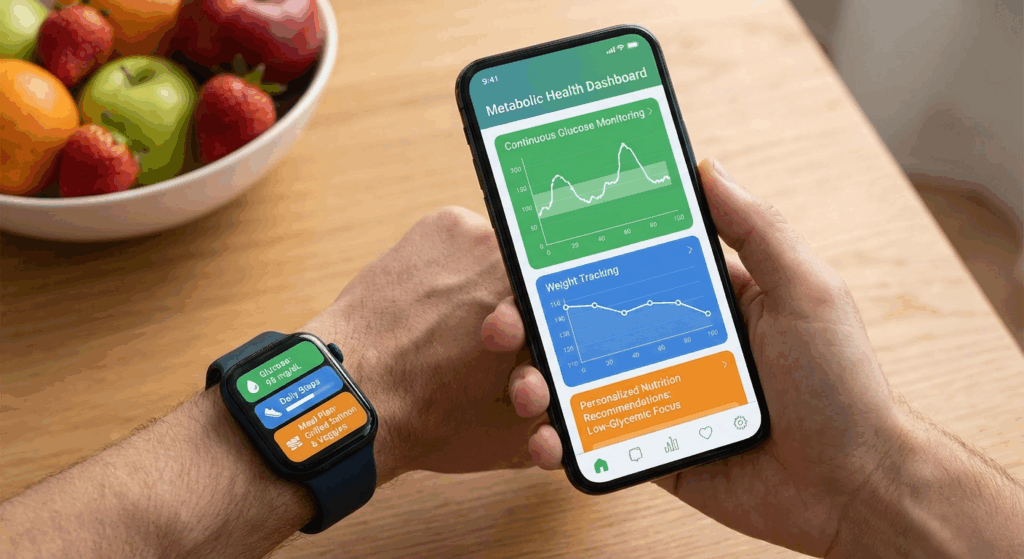
Digital metabolic health monitoring platforms combine wearable technology with AI-powered insights
Market Landscape: A Booming Industry
The digital therapeutics for obesity market reached $2.14 billion in 2024 and is projected to expand at a compound annual growth rate of 20.6% through 2033, reaching an estimated $13.45 billion. Meanwhile, broader estimates for the digital health for obesity market suggest even more dramatic growth, with projections ranging from $57.75 billion in 2024 to $392.89 billion by 2033, representing a CAGR of 24%.[1]
This explosive growth is driven by several converging factors: the escalating global obesity epidemic affecting over 800 million people worldwide, increasing smartphone and wearable device penetration, growing acceptance of digital therapeutic interventions, and the integration of advanced technologies like artificial intelligence and machine learning into healthcare platforms.[2]
Investment activity reflects this market momentum. Biopharma investment in metabolic treatments more than tripled between 2023 and 2024, while U.S. digital health funding reached $17.2 billion in 2024, a 4% year-over-year increase that broke a two-year decline. The obesity drug market alone could reach $150 billion at its peak in 2035, creating substantial opportunities for digital health companies that integrate medication management with technology-enabled support.[3]
Major Players and Funding Leaders
GLP-1 Integration Platforms
The emergence of GLP-1 medications like Ozempic, Wegovy, and Mounjaro has catalyzed an entirely new category of digital health startups that combine prescription access with behavioral support.
Calibrate emerged as an early mover in this space, raising $128 million in total funding to deliver a one-year “metabolic reset” program that pairs GLP-1 medications with one-on-one coaching. The program costs $199 per month (excluding medication costs) and requires an initial three-month commitment. Clinical data from approximately 16,000 members showed average weight loss of 16.2% at 12 months, 17.3% at 18 months, and 17.9% at 24 months.[4]
Found, based in California, has raised $132 million and achieved a $600 million valuation. The platform offers personalized weight care management programs centered on weight loss, weight management, and healthy eating, with services available across 37 states. Found’s annual recurring revenue grew 6x in a single year, and the platform helped users lose a collective 300,000 pounds. The company received backing from Google Ventures, Atomic Management, Able Partners, and WestCap Group.[5]
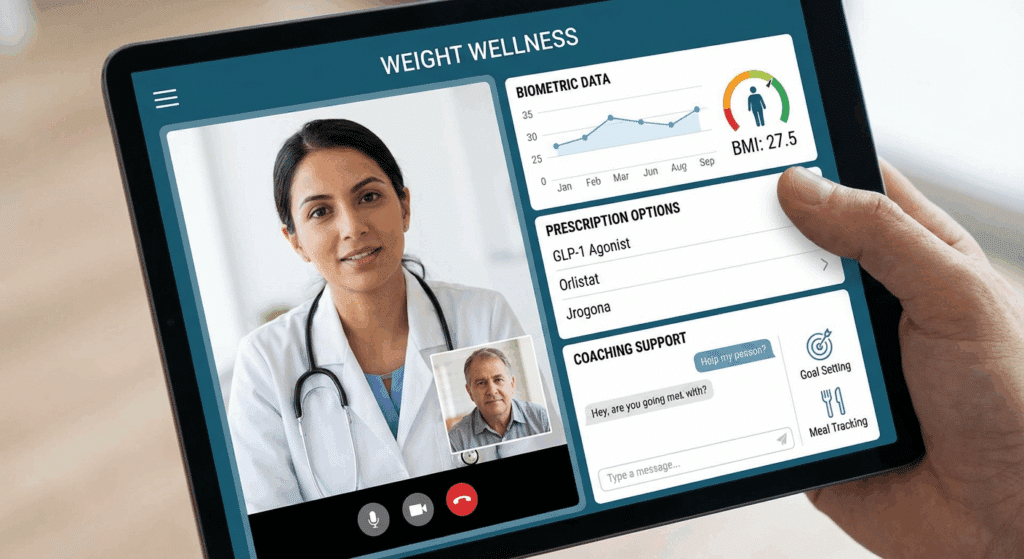
Telehealth platforms integrate medical consultations with digital tools for comprehensive weight management
Noom stands as the most heavily funded player in behavioral weight loss, having raised $628 million in total funding. The app uses cognitive behavioral therapy principles to address the psychology behind eating habits, offering daily lessons, personalized coaching, and AI support. Noom recently expanded into GLP-1 prescriptions through its Noom Med program, providing access to medications like Ozempic, Wegovy, and Mounjaro alongside its core behavior change platform.[5]
Ro, which operates the Ro Body Program, has raised over $1 billion in funding and provides a streamlined telehealth service combining GLP-1 medications with lifestyle tracking and clinical assistance through a dedicated app. The platform emphasizes low-friction access to branded medications with virtual onboarding.[4]
Form Health secured $38 million in Series B funding in June 2024, led by Sound Ventures. The company provides virtual obesity care with a dedicated clinical team consisting of American Board of Obesity Medicine certified doctors and Registered Dietitians who are Certified Specialists in Obesity and Weight Management. Form is in-network with most major insurance plans, including Medicare, distinguishing it from many direct-to-consumer competitors.[6]
WeightWatchers made a strategic pivot into medication-based weight management by acquiring Sequence for $106 million in 2023. Sequence connects patients with providers who can prescribe weight loss drugs through a $99-per-month subscription service. The acquisition enabled WeightWatchers to combine its established behavior change programs with clinical medication management, serving 87,000 clinic subscribers as of early reporting periods.[7]
Continuous Glucose Monitoring and Metabolic Tracking
The application of continuous glucose monitors to non-diabetic populations has created an entirely new category of metabolic health startups.
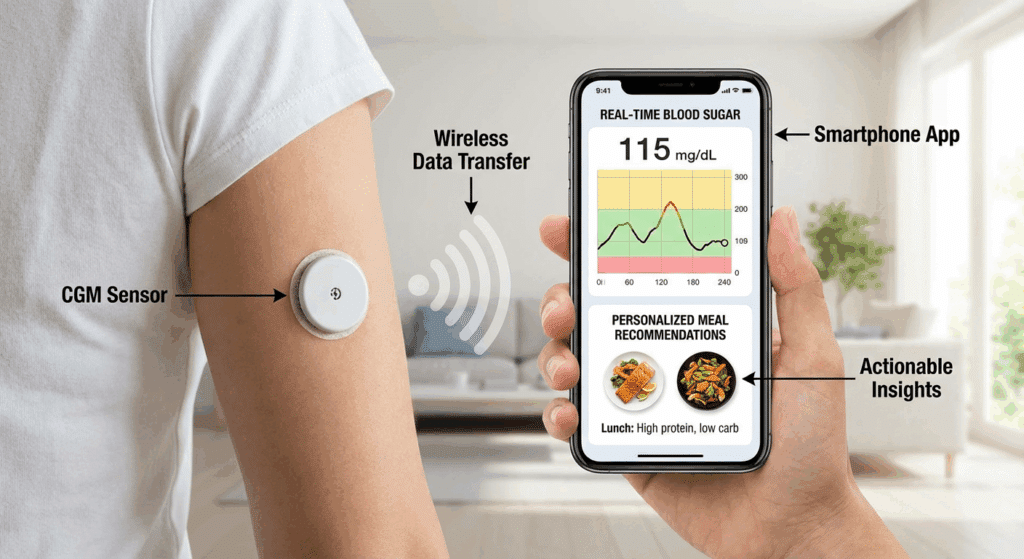
Continuous glucose monitors provide real-time metabolic feedback for personalized nutrition guidance
Levels raised $38 million in a Series A from Andreessen Horowitz and AirAngels, achieving a $300 million valuation. The New York-based company provides continuous glucose monitors that enable users to gain real-time insights into how food, exercise, sleep, and stress affect their metabolic health. Levels serves a beta community of 25,000 paying members and addresses diabetes prevention, physical and cognitive performance, and inflammation management.[8]
Key competitors in the CGM metabolic health space include Signos ($17 million raised), Veri ($4 million raised), Nutrisense, and January ($29 million raised, including debt). These platforms differentiate themselves through varying approaches to coaching, AI integration, and sensor technology. Signos is the only company combining CGMs with real-time AI-driven exercise recommendations and glucose spike notifications. January uses AI analysis to provide food recommendations after five days of data collection and requires integration with Apple Watch or Oura Ring.[9]
The global mHealth apps market, which includes these CGM platforms, is expected to reach $314.6 billion by 2028, growing at a CAGR of 34.8%. This growth is driven by the rising prevalence of chronic diseases requiring continuous monitoring and the shift toward remote healthcare accelerated by the pandemic.[10]
AI-Powered Digital Twins and Precision Medicine
Twin Health represents the cutting edge of metabolic health technology through its AI digital twin approach. The company raised $53 million in Series E funding led by Maj Invest of Denmark in August 2025, bringing its valuation to over $950 million. Existing investors Iconiq and Temasek participated in the round.[11]
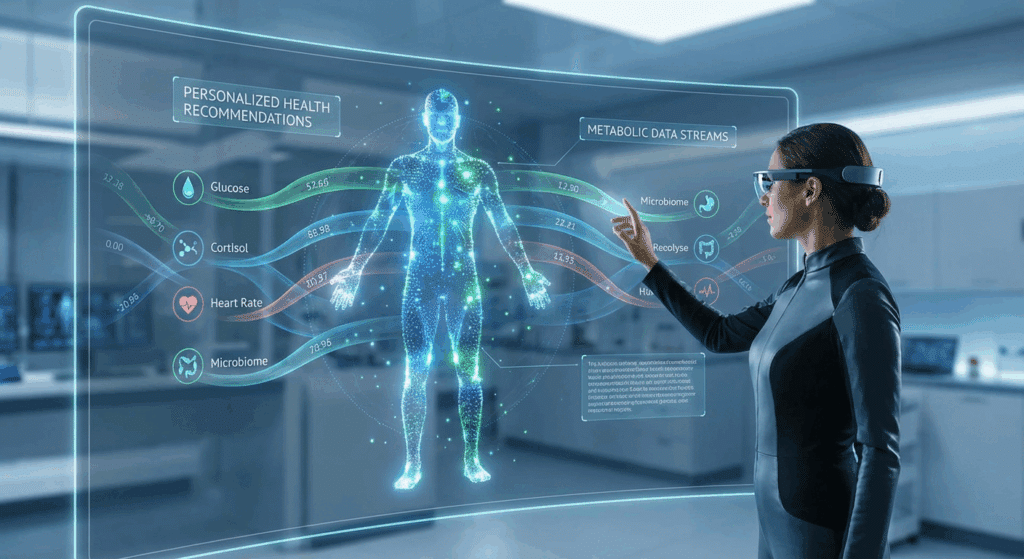
AI digital twins create personalized metabolic health models based on individual biomarker data
Twin Health creates a real-time digital twin for each member built from thousands of data points across biomarkers, behaviors, and preferences. The platform reflects not just metabolism but also habits in nutrition, sleep, and physical activity, providing continuous guidance by optimizing biology and behavior in unison. A landmark study published in the New England Journal of Medicine Catalyst found that 71% of study participants using the digital twin lowered their A1C and were frequently able to stop using medications.[11]
The company operates on a performance-based care model, with clients paying only when members achieve specific clinical outcomes such as A1C reduction, weight loss, or medication elimination. Twin Health reports over 90% member retention with less than 1% voluntary churn and partners with employers and health plans including Benjamin Moore, HCSC, Heritage Group Health Program, Invitation Homes, and Medline.[12]
European and International Innovators
Holi, a Polish digital metabolic health clinic, raised €3 million in seed funding from 4growth VC in November 2025. Founded in early 2023 by Pawel Seweryn and Mikolaj Szymanski, Holi emphasizes cooperation between nutritionists, scientists, and a medical board to treat obesity comprehensively. The company plans to use funding to expand beyond Poland into other European markets and advance its AI-human care system.[2]
Vitadio, based in the Czech Republic, develops clinically validated digital therapeutics for type 2 diabetes. The company’s app is approved to support diabetes treatment and is fully covered by health insurers in Germany. Vitadio closed a €3 million investment round led by Theras Group and Jafam Holding.[13]
Ani Biome, a Croatian age-tech startup, offers a personalized approach to metabolic health and longevity based on AI-driven fermented micro blends. The platform uses non-invasive diagnostics including daily psychobiosocial questions, tongue and skin scans, and wearables data to create personalized monthly plans. The startup maintains a bank of 1,500 metabolites and was raising €10 million as of May 2023.[13]
Personalized Nutrition and AI Meal Planning
Viome has raised $20.5 million from investors including Khosla Ventures and Bold Capital Partners. The company analyzes blood, urine, saliva, and stool samples to develop biochemistry profiles and microbiome pictures, feeding this data into a smartphone app that offers personalized diet and lifestyle recommendations.[14]
DayTwo, headquartered in Tel Aviv, raised $12 million from Johnson & Johnson Innovation, Mayo Clinic Ventures, and Seventure Partners. The company provides personalized nutrition based on microbiome analysis using at-home stool sample kits to sequence gut microbiome DNA and produce unique nutrition profiles.[14]
CureFit, India’s most well-funded fitness tech company at $179 million, offers a mobile-first health platform that includes an “eat.fit” component providing machine-driven demand prediction for orders, menu programming, and food delivery management. HealthifyMe ($19 million raised) connects users with nutritionists and trainers to craft personalized diet and workout plans once specific fitness or weight loss goals are set.[15]
Suggestic uses AI to track and suggest meals for customers seeking to prevent or manage chronic illnesses through food-as-medicine approaches. These personalized nutrition platforms are increasingly partnering with consumer packaged goods companies to support product integration and promotion.[16]
Broader Metabolic Health Solutions
Omada Health achieved a $1 billion valuation with $449.7 million in total funding, including debt. The company provides virtual care for chronic conditions including diabetes, hypertension, and prediabetes. Omada partners with employers and health plans to offer programs at no cost to eligible members, featuring meal tracking, weekly lessons, one-on-one health coaching, virtual community support, and wireless smart scales.[17]
Virta Health focuses specifically on type 2 diabetes reversal through nutrition-first approaches. A five-year clinical trial showed 71% of participants achieved diabetes reversal (A1c below 6.5% without diabetes medications other than metformin), with one-fifth achieving full remission. The company offers three solutions: diabetes reversal, sustainable weight loss, and sustainable weight loss with responsible GLP-1 prescribing via its Trusted Prescriber Network.[18]
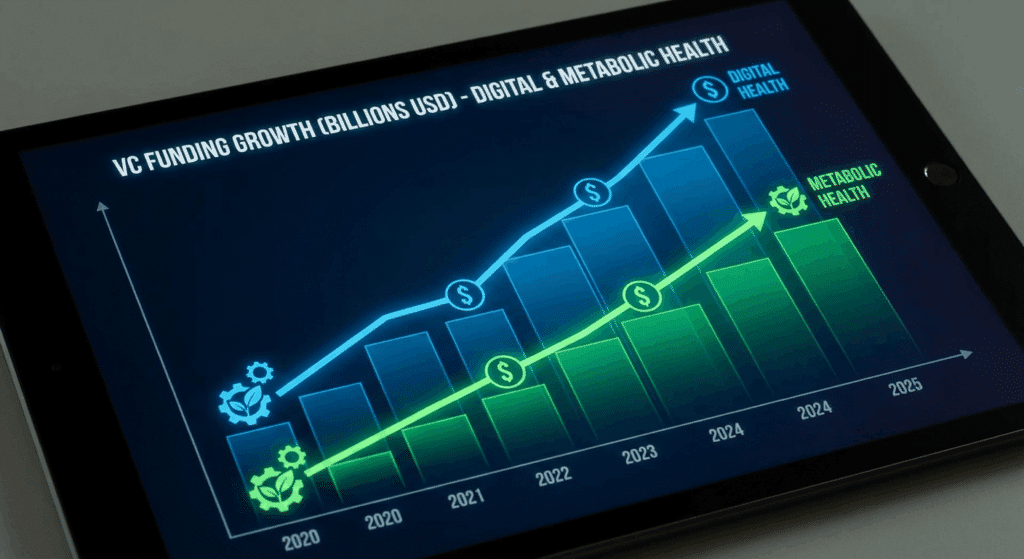
Investment in metabolic health and obesity technology has surged as the market expands rapidly
Pharmaceutical Startups Entering the Space
Beyond digital health platforms, numerous biopharma startups are developing next-generation obesity drugs and receiving substantial venture backing.
Kailera Therapeutics announced one of biotech’s biggest financing rounds of 2025, raising $600 million in Series B funding led by Bain Capital’s private equity group. This came just one year after the startup launched with $400 million.[19]
Verdiva Bio emerged from stealth in January 2025 with $411 million in Series A financing, the third-largest funding round since early 2022 among top venture capital firms. The company was founded by former Aiolos Bio executives who had previously negotiated a $1 billion sale to GSK. Forbion and General Atlantic led the financing, with participation from RA Capital Management, OrbiMed, Logos Capital, Lilly Asia Ventures, and LYFE Capital.[3]
Metsera raised approximately $550 million over 2024 from investors including GV and SoftBank Vision Fund before being acquired by Pfizer for $4.9 billion in late 2025. The clinical-stage company had emerged from stealth in April with $290 million in financing led by ARCH Venture Partners.[20]
Antag Therapeutics raised $84 million in Series A in December 2024 from Versant Ventures and Novo Holdings, focusing on an endogenous GIPR antagonist designed to enhance weight loss when co-administered with other obesity drugs.[6]
Investment Trends and Market Dynamics
Several patterns characterize current investment in the metabolic health sector:
Mega-rounds dominate: The median biotech venture round has remained near $100 million, continuing a trend toward larger financings that began in 2024. Four of the largest venture rounds closed in the final quarter of 2024, potentially signaling a boom period for 2025.[21]
AI fund proliferation: Major corporations are launching dedicated AI investment vehicles. Cisco Investments unveiled a $1 billion fund in June 2024, 20% of which had been allocated by September to unicorns like Mistral AI, Cohere, and Scale AI. Salesforce Ventures announced a $500 million AI fund, double the size of its debut fund.[21]
Performance-based models emerge: Companies like Twin Health are pioneering results-driven pricing where clients pay only when members achieve specific clinical outcomes. This shift from subscription-only models addresses payer concerns about return on investment.[22]
GLP-1 integration becomes table stakes: Nearly every major weight management platform now offers or plans to offer GLP-1 medication access, recognizing that combination therapy (medication plus behavioral support) produces superior outcomes compared to either approach alone.[4]
Employer and health plan partnerships: Rather than direct-to-consumer models, successful startups increasingly partner with employers and insurers to reach populations at scale while demonstrating cost savings through medication reduction and improved health outcomes.[12]
Regulatory tailwinds: European regulators are creating clearer pathways for digital therapeutics through frameworks like the EU Medical Device Regulation. Germany’s Digital Healthcare Act (DiGA) allows select digital therapeutics to be prescribed and reimbursed by statutory health insurance, while India’s Ayushman Bharat Digital Mission establishes a unified digital health ecosystem.[2]
Technology Convergence
The most successful metabolic health startups integrate multiple technological approaches:
Wearable devices and sensors: CGMs, smart scales, activity trackers, and blood pressure monitors provide continuous data streams that inform personalized recommendations.[10]
Artificial intelligence and machine learning: AI analyzes complex patterns across biomarkers, behaviors, and outcomes to generate predictions and personalized guidance that would be impossible through manual analysis.[11]
Telehealth infrastructure: Virtual consultations with physicians, dietitians, and health coaches eliminate geographic barriers and enable continuous support between traditional clinical visits.[4]
Behavioral science integration: Platforms incorporate cognitive behavioral therapy, habit formation techniques, and motivational interviewing to address the psychological dimensions of eating and exercise behaviors.[5]
Medication management: For appropriate patients, prescription access to GLP-1s and other obesity medications is integrated with digital monitoring to optimize dosing and manage side effects.[23]
Challenges and Criticisms
Despite rapid growth, metabolic health technology companies face several challenges:
Medication shortages and supply chain issues: Several platforms have experienced delays in shipping GLP-1 medications, particularly as they transition from compounded formulations to FDA-approved branded drugs following regulatory guidance.[24]
Insurance coverage limitations: While some platforms accept insurance, coverage for digital obesity programs remains inconsistent. Out-of-pocket costs can exceed $1,000 monthly when medication expenses are included.[25]
Long-term sustainability questions: Critics note that many platforms report outcomes at 12-24 months, but obesity typically requires lifelong management. Questions remain about whether digital-only interventions can support maintenance over decades.[18]
Data privacy concerns: The collection of detailed health data, microbiome information, and continuous glucose monitoring raises privacy questions, particularly as platforms integrate with third-party wearables and apps.[26]
Accessibility and equity: Monthly subscription fees ranging from $70 to $200+ (before medication costs) may limit access for populations at highest risk for metabolic disease.[27]
Clinical Evidence and Outcomes
The metabolic health technology sector is increasingly supported by peer-reviewed research:
Twin Health published results in the New England Journal of Medicine Catalyst showing 71% of participants lowered A1C with frequent medication discontinuation.[12]
Virta Health‘s five-year clinical trial demonstrated that one-fifth of patients completing five years of treatment achieved full diabetes remission (A1c <6.5% without diabetes medications for at least 3 months), with half of all diabetes drugs eliminated at five years.[18]
Calibrate released data from approximately 16,000 members showing average weight loss maintained at 17.9% at 24 months.[4]
Noom users can generally expect to lose 1-2 pounds per week, though outcomes vary based on starting weight, diet, goals, and activity level. A 2017 study in The Lancet found 57% of WeightWatchers members lost weight compared to 42% with similar programs.[28]
Studies comparing medication alone to medication plus behavioral intervention consistently show superior outcomes for combination therapy. Wegovy demonstrated 14.9% average weight loss over 68 weeks, while lifestyle and behavioral therapy alone produced only 3-5% weight loss.[29]
Future Directions
Several trends are likely to shape the next phase of metabolic health technology:
Muscle preservation strategies: Companies like SixPeaks Bio are developing therapies that preserve muscle mass during weight loss, addressing a key limitation of aggressive fat loss approaches.[6]
AI-enabled drug discovery: Platforms are using AI to model weight loss durability, reduce “yo-yo” effects, and predict which patients will respond to specific interventions.[6]
Expansion beyond weight loss: Successful platforms are broadening into adjacent areas including hormonal health, mental health, longevity, and primary care. Fella Health, for example, expanded from men’s weight loss to include testosterone optimization.[24]
Integration of multiple modalities: The most advanced platforms combine CGMs, medications, AI analysis, human coaching, telehealth access, and behavioral science into comprehensive ecosystems rather than standalone tools.[30]
Real-world evidence generation: As platforms accumulate data on thousands or millions of users, they’re positioned to contribute to understanding of metabolic disease at population scale, potentially influencing clinical guidelines and treatment protocols.[10]
Key Takeaways
Market opportunity is massive: The digital health for obesity market could reach $293-393 billion by 2032-2033, driven by over 800 million people worldwide living with obesity and growing acceptance of technology-enabled interventions.
Investment is surging: Biopharma investment in metabolic treatments more than tripled between 2023 and 2024, with major funding rounds consistently exceeding $50 million and unicorn valuations becoming common.
GLP-1 medications are reshaping the landscape: The success of drugs like Ozempic and Wegovy has catalyzed an entire category of digital health companies that combine prescription access with behavioral support, producing superior outcomes compared to either approach alone.
Technology integration is key to success: The most effective platforms combine multiple modalities including AI analysis, continuous monitoring via wearables, telehealth access to clinicians, and behavioral science principles.
Evidence base is strengthening: Peer-reviewed studies are demonstrating that digital metabolic health interventions can achieve diabetes reversal, significant sustained weight loss, and medication reduction in substantial percentages of participants.
Business models are evolving: Performance-based pricing, employer partnerships, and insurance integration are replacing pure direct-to-consumer subscription models as companies demonstrate ROI through reduced healthcare costs.
Personalization is paramount: AI digital twins, microbiome analysis, and continuous glucose monitoring enable unprecedented personalization, moving beyond population averages to individual biomarker optimization.
European markets are active: Companies like Holi, Vitadio, and Ani Biome demonstrate that metabolic health innovation is global, with European regulatory frameworks increasingly supportive of digital therapeutics reimbursement.
Challenges remain: Medication supply chain issues, insurance coverage gaps, long-term sustainability questions, and accessibility concerns must be addressed for the sector to reach its full potential.
The future is integrated: Next-generation platforms will likely combine obesity treatment with muscle preservation, hormonal optimization, longevity interventions, and primary care into comprehensive metabolic health ecosystems.
Frequently Asked Questions
What are metabolic health startups?
Metabolic health startups are companies that use digital technology, AI, wearable devices, and telehealth to help people improve their metabolic function, manage weight, prevent or reverse diabetes, and reduce obesity-related health risks. These platforms typically combine data from continuous glucose monitors, smart scales, and activity trackers with personalized coaching and, in some cases, prescription medications.
How much does it cost to use these platforms?
Costs vary significantly. Monthly subscription fees typically range from $70 (Noom) to $199 (Calibrate) for coaching and platform access. CGM programs like Nutrisense start around $215/month. Medication costs are often additional, with GLP-1 drugs like Wegovy costing $400-500/month without insurance. Some platforms like Omada and Virta are available at no cost through employer or health plan benefits.
Do these programs actually work?
Peer-reviewed research shows significant efficacy for leading platforms. Calibrate reported 17.9% average weight loss at 24 months among 16,000 members. Virta Health’s five-year trial showed 71% of participants achieving diabetes reversal. Twin Health’s study found 71% of users lowered A1C with frequent medication discontinuation. Outcomes vary by individual adherence, starting health status, and program features, but evidence increasingly supports digital metabolic health interventions.
Are GLP-1 medications necessary for success?
No. Platforms like Virta Health have demonstrated significant diabetes reversal and weight loss through nutrition therapy alone, without medications. However, combination therapy (medication plus behavioral support) consistently produces superior outcomes compared to either approach alone. GLP-1s can provide a “jetpack for positive behavior change” by reducing appetite and calorie intake by approximately 30%, making adherence to lifestyle modifications easier.
Can I get insurance coverage?
Insurance coverage varies by platform and plan. Form Health is in-network with most major insurance plans including Medicare. Some employer-sponsored plans cover Omada, Virta, or Twin Health at no cost to employees. Direct-to-consumer platforms typically require out-of-pocket payment for subscriptions, though some accept HSA/FSA funds. GLP-1 medication coverage depends on whether obesity or diabetes is diagnosed and specific insurance policy terms.
What’s the difference between CGM platforms like Levels and weight loss platforms like Calibrate?
CGM platforms focus on metabolic insights and optimization for generally healthy individuals seeking to improve performance, prevent disease, or understand how food affects their glucose. They don’t typically prescribe medications or focus primarily on weight loss. Weight loss platforms like Calibrate are medical programs designed to treat obesity as a chronic disease, combining prescription GLP-1 medications with coaching to achieve significant weight reduction in overweight or obese individuals.
How do AI digital twins work?
AI digital twins, pioneered by Twin Health, create a virtual model of an individual’s metabolism using thousands of data points from biomarkers, behaviors, and preferences. The model continuously learns and adapts based on real-time data from wearables and user inputs, providing personalized daily guidance on nutrition, activity, and sleep that’s optimized for that specific person’s biology rather than population averages.
Are these programs safe?
Reputable platforms operate under medical supervision with board-certified physicians and registered dietitians. GLP-1 medications are FDA-approved and clinically proven, though they carry side effects including nausea, gastrointestinal issues, and potential muscle loss. Continuous glucose monitors are safe medical devices. However, individuals should consult healthcare providers before starting any weight loss or metabolic health program, especially if taking medications for diabetes or blood pressure.
Can these programs help reverse type 2 diabetes?
Yes. Virta Health specifically focuses on diabetes reversal, defining it as achieving A1c below 6.5% without diabetes medications other than metformin. Their five-year study showed one-fifth of patients achieving full remission. Twin Health reported 71% of participants lowering A1C with medication reduction or elimination. However, diabetes and related issues can return if lifestyle changes aren’t maintained, so these programs require long-term commitment.
What happens when I stop using the platform?
This is a critical consideration. Obesity and metabolic dysfunction are chronic conditions that typically require ongoing management. Many platforms report outcomes at 12-24 months, but limited data exists on long-term maintenance after discontinuation. Some companies like Twin Health and Virta emphasize teaching sustainable habits that persist beyond active program participation. Weight regain is common after stopping GLP-1 medications without maintained behavioral changes, which is why combination therapy approaches may offer better long-term prospects.
References
- Digital Therapeutics Obesity Market Research Report 2033. https://dataintelo.com/report/digital-therapeutics-obesity-market Accessed November 24, 2025
- Holi raises €3M for digital obesity treatment platform. https://sesamers.com/fundraising/holi-raises-3m-digital-obesity-treatment/ Accessed November 24, 2025
- Verdiva starts up with $411M and a portfolio of obesity drugs from China. https://www.biopharmadive.com/news/verdiva-obesity-biotech-startup-launch-sciwind-china/736880/ Accessed November 24, 2025
- Digital health companies are launching programs around GLP-1s. https://www.cnbc.com/2024/05/25/digital-health-companies-are-launching-programs-around-glp-1s-.html Accessed November 24, 2025
- https://cashmere.io/v/PNLtUB. https://cashmere.io/v/PNLtUB Accessed November 24, 2025
- VC Market Map in Obesity. https://www.linkedin.com/pulse/vc-market-map-obesity-whats-next-dr-luka-ni%C4%87in-jcfde Accessed November 24, 2025
- WeightWatchers Is Acquiring Sequence for $106 Million. https://www.businessinsider.com/weightwatchers-is-acquiring-sequence-for-106-million-2023-3 Accessed November 24, 2025
- https://cashmere.io/v/pwuh00. https://cashmere.io/v/pwuh00 Accessed November 24, 2025
- https://cashmere.io/v/JAcN9x. https://cashmere.io/v/JAcN9x Accessed November 24, 2025
- https://cashmere.io/v/FD19pR. https://cashmere.io/v/FD19pR Accessed November 24, 2025
- Twin Health Announces $53M Investment as AI Digital Twin Unlocks Sustainable Diabetes and Obesity Outcomes While Reducing Medications. https://www.prnewswire.com/news-releases/twin-health-announces-53m-investment-as-ai-digital-twin-unlocks-sustainable-diabetes-and-obesity-outcomes-while-reducing-medications-302535848.html Accessed November 24, 2025
- Exclusive: Twin Health, metabolic health startup, raises $53 million Series E at $950 million valuation. https://fortune.com/2025/08/21/exclusive-twin-health-metabolic-health-startup-raises-53-million-series-e-at-950-million-valuation/ Accessed November 24, 2025
- How Metabolic Wellness Can Redefine Healthcare in CEE. https://therecursive.com/10-metabolic-health-startups-that-lead-cee-s-wellness-evolution/ Accessed November 24, 2025
- https://cashmere.io/v/m0pvJR. https://cashmere.io/v/m0pvJR Accessed November 24, 2025
- https://cashmere.io/v/3PXaXQ. https://cashmere.io/v/3PXaXQ Accessed November 24, 2025
- https://cashmere.io/v/M6ZCu2. https://cashmere.io/v/M6ZCu2 Accessed November 24, 2025
- Omada diabetes prevention. https://www.capbluecross.com/wps/portal/cap/home/explore/resource/diabetes/healthy-living Accessed November 24, 2025
- Virta Health clinical trial patients showed lasting type 2 diabetes reversal and remission at 5 years.. https://www.virtahealth.com/press/virta-sustainable-health-improvements-5-year-diabetes-reversal-study Accessed November 24, 2025
- Kailera Therapeutics, an obesity drug startup, raises $600 million. https://www.statnews.com/2025/10/14/kailera-therapeutics-obesity-drugs-fundraising/ Accessed November 24, 2025
- 5 Startups Looking to Compete in the Obesity Space. https://www.biospace.com/drug-development/5-startups-looking-to-compete-in-the-obesity-space Accessed November 24, 2025
- Huge AI funds, obesity drugs and carbon capture – the CVC trends of 2024 -. https://globalventuring.com/corporate/energy-and-natural-resources/corporate-vc-trends-in-2024/ Accessed November 24, 2025
- Twin Health Raises $53M to Expand AI Digital Twin Platform for Metabolic Health. https://community.hlth.com/insights/news/twin-health-raises-53m-to-expand-ai-digital-twin-platform-for-metabolic-health-2025-08-22 Accessed November 24, 2025
- WeightWatchers to Acquire Sequence, a Digital Health. https://www.globenewswire.com/news-release/2023/03/06/2621551/0/en/WeightWatchers-to-Acquire-Sequence-a-Digital-Health-Platform-for-Clinical-Weight-Management.html Accessed November 24, 2025
- Fella Health Review: Can It Really Help Men Lose Weight?. https://www.nutritionnc.com/fella-health-review/ Accessed November 24, 2025
- 25 Startups Transforming The Weight-Loss Landscape. https://www.thefutureofhealth.co/p/25-startups-transforming-the-weight Accessed November 24, 2025
- January AI glucose monitor review: A pricey but effective approach to fine-tune your diet. https://www.popsci.com/gear/january-ai-glucose-monitor-review/ Accessed November 24, 2025
- Noom: Go Micro for Big Results.. https://www.noom.com/ Accessed November 24, 2025
- The 5 Best Weight Loss Programs in 2025. https://www.healthline.com/nutrition/best-weight-loss-programs Accessed November 24, 2025
- Just a moment.... https://www.fiercehealthcare.com/digital-health/weightwatchers-acquisition-sequence-allows-expansion-remote-prescribing-hot-weight Accessed November 24, 2025
- Form Health Named a “Fierce 15” Company of 2025. https://www.formhealth.co/press/fierce-healthcare Accessed November 24, 2025