Emergencies can happen without warning, and people with disabilities face unique challenges during disasters. Creating an inclusive emergency plan that addresses specific disability-related needs can mean the difference between safety and danger during a crisis. From power outages that affect medical equipment to evacuation routes that aren’t wheelchair accessible, these situations require special planning.
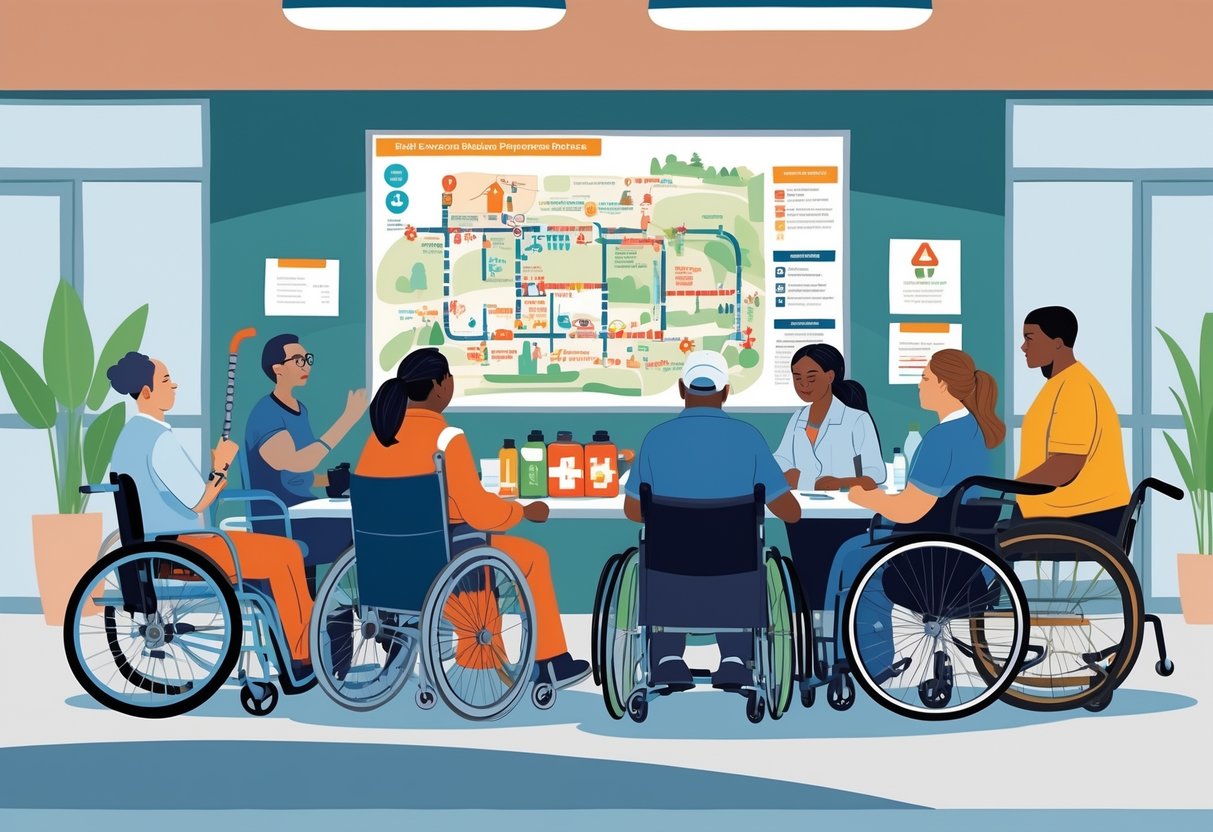
Many standard emergency plans don’t account for the needs of people with disabilities. Mobility, hearing, visual, or cognitive disabilities can create specific needs[1] that individuals must address to respond effectively to emergencies. Without proper planning, people with disabilities may lose access to essential life support services or face isolation during disasters.
The good news is that emergencies can present unique challenges for people with disabilities, but with the right preparation, these challenges can be effectively managed[2]. Planning ahead allows individuals with disabilities and their caregivers to maintain safety and confidence during difficult situations.
Key Takeaways
- People with disabilities need personalized emergency plans that address their specific mobility, communication, and medical requirements
- Accessible communication methods and backup systems are essential for receiving emergency alerts and staying connected during disasters
- Building a support network and preparing specialized emergency supplies helps ensure safety when standard emergency services may be limited
Understanding Inclusive Emergency Preparedness
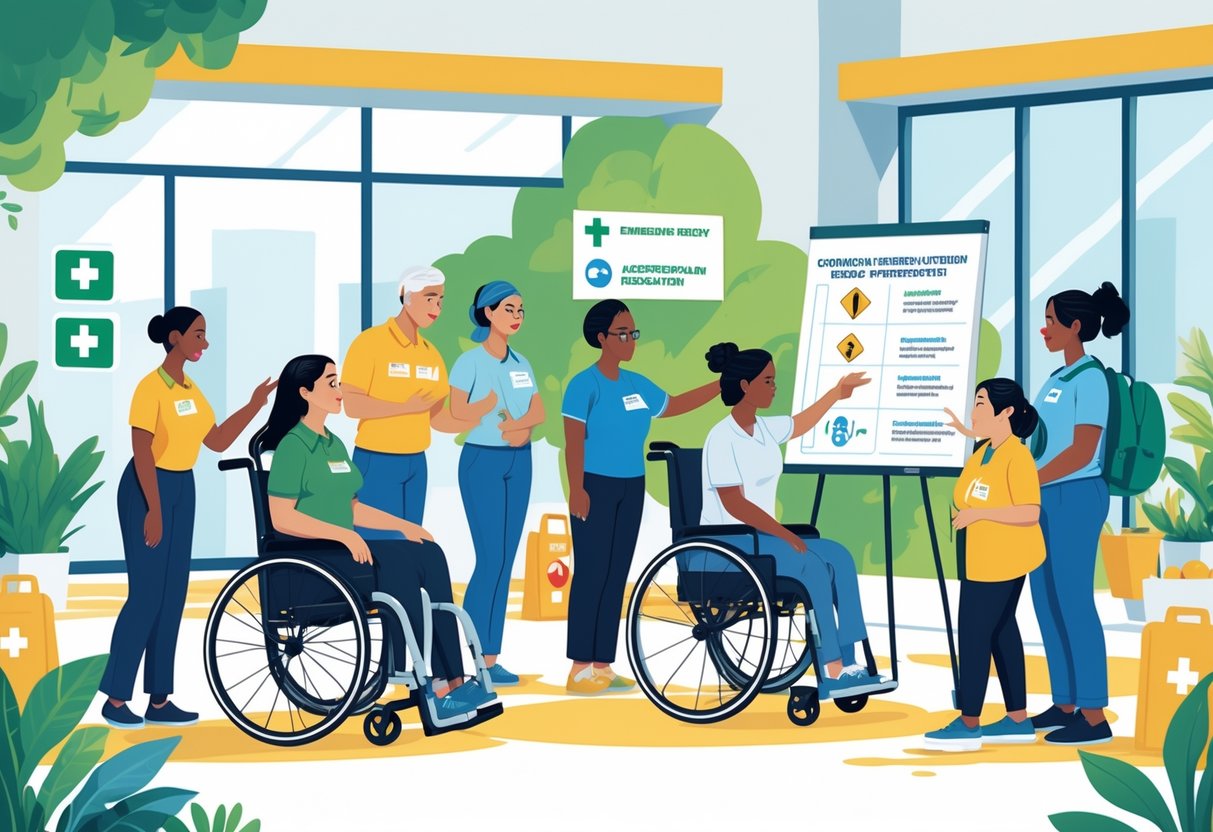
Inclusive emergency preparedness ensures that people with disabilities receive equal protection and assistance during disasters. This approach addresses specific challenges that individuals with disabilities face during emergencies[3] while meeting legal requirements and following proven planning principles.
The Importance of Disability Inclusion
People with disabilities face greater risks during emergencies than the general population. Disasters disproportionately impact persons with disabilities[4], leaving them more vulnerable to harm, loss, and disruption.
Common barriers include:
- Loss of essential life support services
- Limited access to emergency shelters
- Communication problems during evacuations
- Separation from service animals or assistive devices
During Hurricane Katrina, many people with disabilities were left behind or separated from their support systems. This tragedy showed why emergency plans must include everyone from the start.
Emergency services may be overwhelmed[5] during disasters. First responders might not reach people quickly. People with disabilities often need specific equipment or medications that become hard to get during emergencies.
The disability community represents about 13% of the U.S. population. This large group includes people with mobility, hearing, vision, and cognitive disabilities. Each type of disability creates different needs during emergencies.
Legal and Policy Foundations
Federal laws require emergency planners to include people with disabilities in all disaster planning. The Americans with Disabilities Act (ADA) applies to emergency situations and disaster response.
Key legal requirements:
- Emergency shelters must be accessible
- Communication must be available in multiple formats
- Transportation during evacuations must accommodate wheelchairs
- Service animals must be allowed in all emergency facilities
FEMA and other agencies now emphasize integrating people with disabilities[6] into emergency preparedness efforts. This represents a major shift in how emergency management works.
The Post-Katrina Emergency Management Reform Act requires FEMA to help people with disabilities during disasters. The Sandy Recovery Improvement Act also strengthened disability rights in emergency response.
State and local governments must follow ADA rules during emergencies. They cannot use disasters as an excuse to deny equal access to people with disabilities.
Key Principles of Inclusive Preparedness
Effective emergency planning must prioritize inclusivity[7] to ensure safety and accessibility for individuals with disabilities. The most important principle is involving people with disabilities in all planning phases.
Core planning principles:
| Principle | Description |
|---|---|
| Self-determination | People with disabilities know their own needs best |
| Community integration | Include disability organizations in planning |
| Universal design | Make plans that work for everyone |
| Flexible response | Adapt plans to different disability types |
Planning ahead helps address specific needs[1] that people with mobility, hearing, visual, or cognitive disabilities may have during emergencies.
Emergency managers should work with disability service providers. These organizations understand what their clients need during disasters. They can help create better emergency plans.
Communication plans must include multiple formats. Some people need large print materials. Others need sign language interpreters. Still others need easy-to-read information.
Transportation planning must consider wheelchairs, oxygen tanks, and other medical equipment. Standard evacuation buses might not work for everyone.
Developing a Comprehensive Emergency Plan
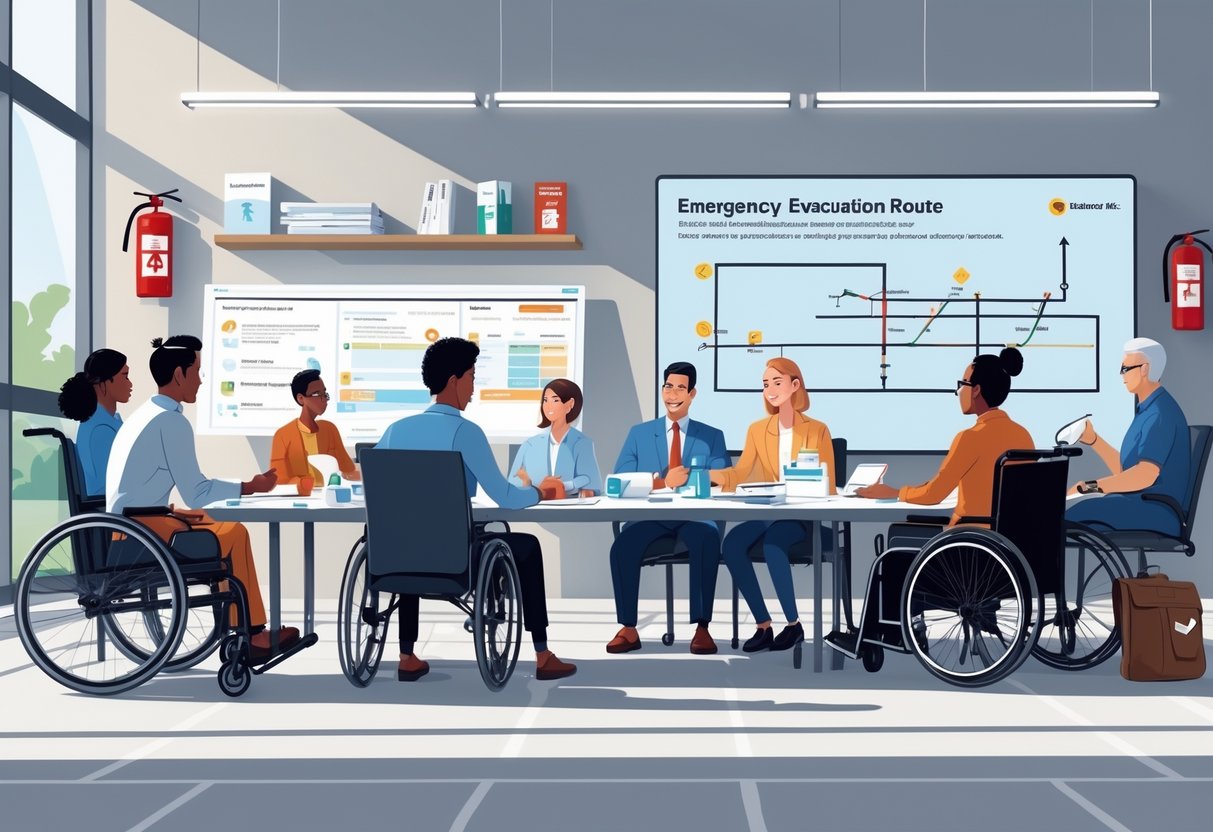
Creating an effective emergency plan requires three key components: personalized steps that address specific disability needs, thorough assessment of individual risks and barriers, and building reliable support networks for assistance during crises.
Personalized Emergency Planning Steps
Emergency planning for individuals with disabilities[7] begins with creating a written plan that addresses specific needs. The plan should include evacuation routes, shelter locations, and communication methods.
People with disabilities need to identify safe rooms in their homes for different emergencies. They should map out multiple escape routes that accommodate mobility aids or service animals.
Communication planning involves choosing accessible alert systems. Visual alarms work for deaf individuals while audio alerts help people with vision loss.
The plan must include medication schedules and medical equipment needs. Backup power sources for electric devices should be identified and tested regularly.
Practice sessions help identify problems with the plan. Regular drills and plan updates[8] ensure the emergency plan stays current and effective.
Documentation should be stored in waterproof containers and shared with trusted contacts.
Assessing Individual Needs and Risks
Individual assessment starts with identifying specific disability-related needs during emergencies. This includes mobility limitations, communication barriers, and medical dependencies that affect safety.
Medical needs assessment covers prescription medications, medical equipment, and personal care requirements. People should list all medications with dosages and identify local pharmacies for refills.
Mobility considerations include wheelchair accessibility, transfer assistance needs, and adaptive equipment requirements. Identifying specific needs and barriers[7] helps create realistic evacuation plans.
Communication barriers must be evaluated for each type of emergency alert system. Some individuals need sign language interpreters while others require written information in large print or braille.
Environmental factors affect safety during emergencies. These include building accessibility, neighborhood hazards, and available transportation options.
Service animal needs require special planning for food, water, and veterinary care during extended emergencies.
Assembling Support Networks
Support networks provide crucial assistance during emergencies when professional help may be delayed. Each person should identify at least three trusted individuals who can provide help.
Primary contacts should live nearby and have keys to the home. They need training on the person’s specific needs and emergency procedures.
Secondary contacts can include family members, friends, or neighbors who live further away. These contacts serve as backup communication points and temporary shelters.
Professional support includes doctors, therapists, and medical equipment suppliers. Their contact information should be easily accessible during emergencies.
Community partnerships with local agencies[7] strengthen support networks. Local emergency services should be informed about residents with special needs through voluntary registries.
Care coordination involves sharing emergency plans with all network members. Regular check-ins help maintain relationships and update contact information.
Workplace and school contacts should understand the person’s emergency needs and evacuation procedures for those locations.
Ensuring Accessible Communication Strategies
People with disabilities need multiple ways to receive emergency information and communicate with help. Inclusive emergency communication ensures equal access to life-saving information[9] during disasters through accessible alerts, clear communication with first responders, and proper assistive devices.
Accessible Alerts and Notifications
Emergency alerts must reach everyone regardless of their disabilities. Standard sirens and text messages do not work for all people.
Visual alerts help people who are deaf or hard of hearing. These include flashing lights, scrolling text displays, and vibrating devices. Emergency managers should install visual warning systems in public buildings and homes.
Audio descriptions support people with vision disabilities. Radio alerts need clear, detailed information about evacuation routes and shelter locations. Weather radios with voice output provide crucial updates.
Simple language makes alerts easier to understand. People with cognitive disabilities need short sentences and basic words. Emergency messages should avoid technical terms and complex instructions.
Multiple formats ensure wider reach. The same alert should appear as text, audio, and visual signals. Social media posts, email alerts, and traditional broadcasts should all carry the same message.
Mobile apps can send customized alerts based on specific disabilities. These apps can increase text size, add audio narration, or provide sign language interpretation.
Communication With First Responders
Clear communication between people with disabilities and emergency workers saves lives. Planning ahead helps arrange communication with emergency responders[3] before disasters strike.
Emergency contact cards should list communication needs. These cards tell responders about speech difficulties, hearing loss, or cognitive conditions. People should keep cards in wallets, bags, and posted near doors.
Basic sign language training helps first responders communicate with deaf individuals. Simple signs for “help,” “hurt,” “medicine,” and “family” can make a big difference during emergencies.
Written communication works when speech is difficult. First responders should carry paper and pens. Smartphones with typing apps also enable quick written exchanges.
Interpreter services provide professional communication support. Many areas offer 24-hour interpreter hotlines that first responders can call. Video relay services work through smartphones and tablets.
The Americans with Disabilities Act requires emergency services to provide effective communication. This means responders must find ways to communicate with all people during emergencies.
Use of Assistive Communication Devices
Assistive devices help people communicate their needs during emergencies. These tools require proper maintenance and backup power to work when needed most.
Communication boards use pictures and symbols instead of words. People point to images showing pain, thirst, medication needs, or family concerns. Emergency kits should include waterproof communication boards.
Text-to-speech devices convert typed words into spoken messages. People with speech disabilities can type their needs and have devices speak for them. Battery-powered models work during power outages.
Smartphone apps offer multiple communication options. Apps can translate text to speech, provide sign language videos, or connect to interpreter services. People should download these apps before emergencies happen.
Backup power sources keep devices working during disasters. Extra batteries, portable chargers, and solar power banks ensure assistive devices stay functional. People should test backup power regularly.
Device maintenance prevents communication failures. Regular cleaning, software updates, and battery replacement keep devices ready for emergencies. Repair kits with basic tools and spare parts help fix minor problems.
Emergency kits should include instruction sheets for assistive devices. Family members and caregivers need to know how to operate communication tools if the primary user cannot do so themselves.
Planning for Safe Evacuation and Sheltering
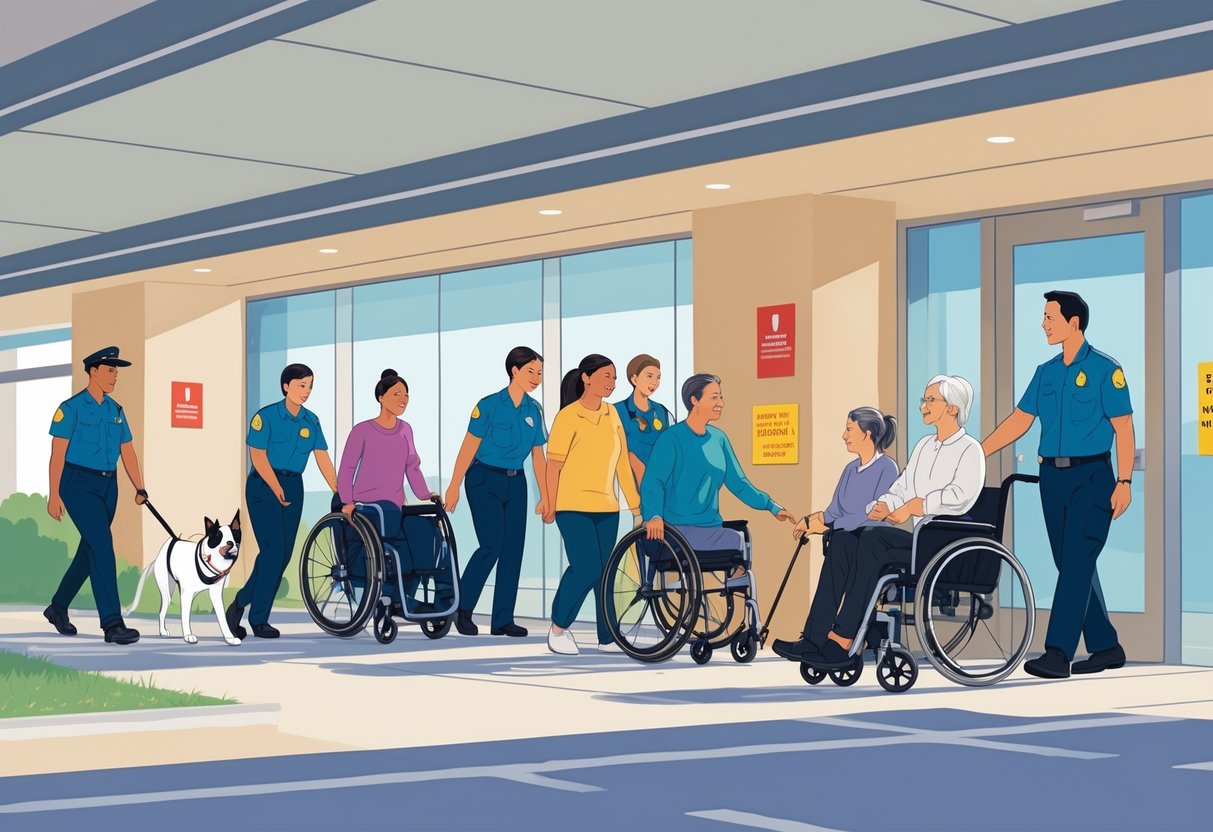
Planning ahead for evacuation and sheltering helps people with disabilities stay safe during emergencies. Key steps include mapping out accessible routes, arranging reliable transportation, and knowing which shelters can meet specific needs.
Identifying Accessible Evacuation Routes
People with disabilities need to identify multiple evacuation routes from their home, workplace, and other frequent locations. The primary route should be the most accessible path with minimal stairs, narrow doorways, or other barriers.
Indoor routes must accommodate wheelchairs, walkers, and other mobility devices. Hallways should be at least 36 inches wide. Doorways need to be 32 inches or wider for wheelchair access.
Outdoor paths require level surfaces or gentle slopes. Gravel, grass, or uneven pavement can block wheelchair users. Check that gates and outdoor exits are wide enough for assistive devices.
Create a backup route in case the main path becomes blocked. Practice using both routes regularly. Time how long each route takes with assistive devices.
Mark evacuation routes clearly with glow-in-the-dark tape or signs. Keep flashlights and batteries near exit points. Store a spare mobility device near alternate exits when possible.
Essential route planning steps:
- Measure doorway and hallway widths
- Test routes with mobility aids
- Identify potential obstacles
- Plan for power outages affecting elevators
- Share route maps with family and caregivers
Transportation Arrangements
Emergency transportation may not be accessible when disasters strike. People with disabilities must arrange backup transportation options before emergencies happen.
Contact local paratransit services to learn about their emergency policies. Many services suspend operations during severe weather. Ask if they provide evacuation assistance or have partnerships with emergency services.
Private vehicle modifications help ensure reliable transportation. Install hand controls, wheelchair lifts, or other needed equipment. Keep vehicles fueled and maintained. Store extra supplies like batteries for wheelchair lifts.
Build a network of family, friends, and neighbors who can provide rides. Give them copies of your emergency evacuation plan[10]. Make sure they know how to secure wheelchairs and other equipment safely.
Transportation checklist:
- Contact information for accessible taxi services
- Backup drivers with accessible vehicles
- Vehicle modification maintenance schedules
- Fuel and battery backup plans
- Equipment securing methods
Register with local emergency services if available. Some areas maintain lists of residents who need evacuation help. Contact your local emergency management office to learn about available programs.
Accessible Shelter Selection
Emergency shelters must follow ADA requirements[11] to accommodate people with disabilities. However, not all shelters offer the same level of accessibility or services.
Research shelters in your area before emergencies occur. Visit potential locations to check accessibility features. Look for ramps, accessible bathrooms, wide doorways, and appropriate lighting.
Essential shelter features include:
- Wheelchair accessible entrances and bathrooms
- Adequate space for mobility devices
- Accessible parking spaces
- Visual and auditory alert systems
- Backup power for medical equipment
Shelters must allow service animals[11] under federal law. Staff can only ask if the animal is required for a disability and what tasks it performs. Emotional support animals are also permitted under emergency shelter rules.
Contact shelter managers to discuss specific needs like refrigeration for medications or space for medical equipment. Ask about available medical support and communication assistance.
Create a shelter information card listing your needs, medications, and emergency contacts. Include details about assistive devices and required accommodations. Keep copies in your emergency kit and with trusted contacts.
Preparing Emergency Kits and Medical Needs
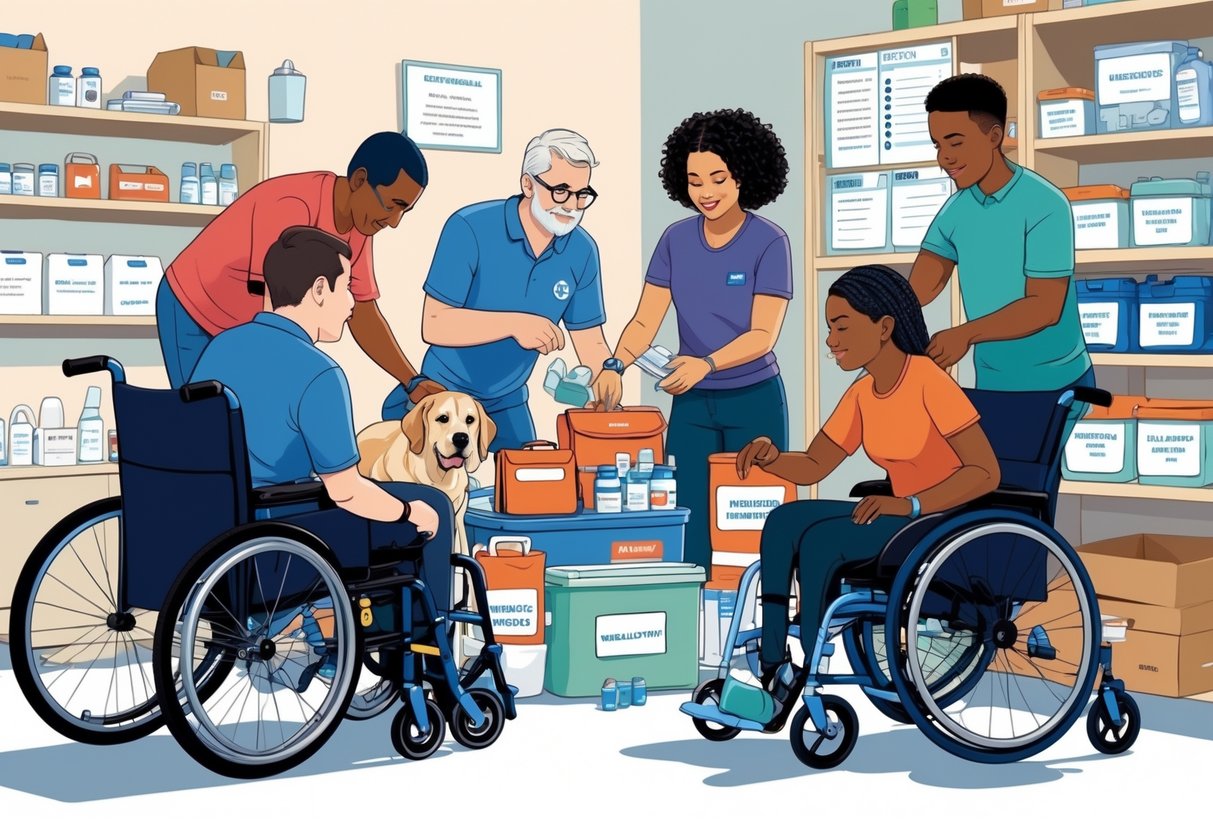
Emergency kits for people with disabilities require specialized supplies beyond standard preparations. These kits must include backup assistive devices, extended medication supplies, and power sources to maintain critical medical equipment during disasters.
Essential Supplies for People With Disabilities
Building an emergency kit for people with disabilities[12] requires careful consideration of daily needs. The kit should contain items used regularly to maintain independence and safety.
Communication and Mobility Items:
- Batteries and portable chargers for hearing aids
- Backup communication devices or speech-generating equipment
- Extra mobility aids like canes, walkers, or wheelchair parts
- Repair kits for assistive devices
People should store contact information in waterproof containers[12]. This list includes phone numbers for doctors, caregivers, and equipment suppliers.
Additional Supplies:
- Medical alert bracelets or identification cards
- Copies of important health documents
- Cash in small bills for emergencies
- Supplies for service animals including food, water, and waste bags
Emergency kits need regular updates every six months. This ensures all items remain functional and current.
Medication and Medical Device Management
Medication storage requires special attention in emergency preparedness. People need at least one week’s supply of all prescription medications stored properly.
Medication Storage Guidelines:
- Keep medications in original labeled containers
- Store temperature-sensitive drugs in insulated coolers
- Include medication lists with dosages and frequencies
- Pack extra supplies like insulin syringes or inhalers
Medical devices need backup power sources during outages. Battery-powered alternatives or generators become essential for life-sustaining equipment.
People should coordinate with healthcare providers before emergencies. Doctors can provide extra prescriptions and emergency medication plans. Pharmacies may offer emergency refill services during disasters.
Medical Supply Checklist:
- Blood glucose testing supplies
- Oxygen tanks or concentrator batteries
- Dialysis supplies if applicable
- First aid materials specific to medical conditions
Maintaining Assistive Technology Functionality
Assistive devices often depend on electricity to function properly. Power outages during emergencies can disable critical equipment that people rely on daily.
Power Backup Solutions:
- Portable battery packs for small devices
- Car chargers for essential equipment
- Solar chargers for long-term outages
- Generator access for larger medical devices
People should identify which assistive devices are most critical. Priority goes to equipment needed for communication, mobility, and life support functions.
Technology Backup Plans:
- Manual wheelchair as backup for power chairs
- Writing materials if communication devices fail
- Magnifying glasses for people with vision impairments
- Extra batteries in various sizes
Regular testing of backup systems prevents failures during actual emergencies. People should practice using alternative methods before disasters strike.
Inclusive emergency preparedness[13] means considering all daily technology needs. Simple solutions like extra phone chargers can make significant differences during extended outages.
Community Resources and Ongoing Improvement
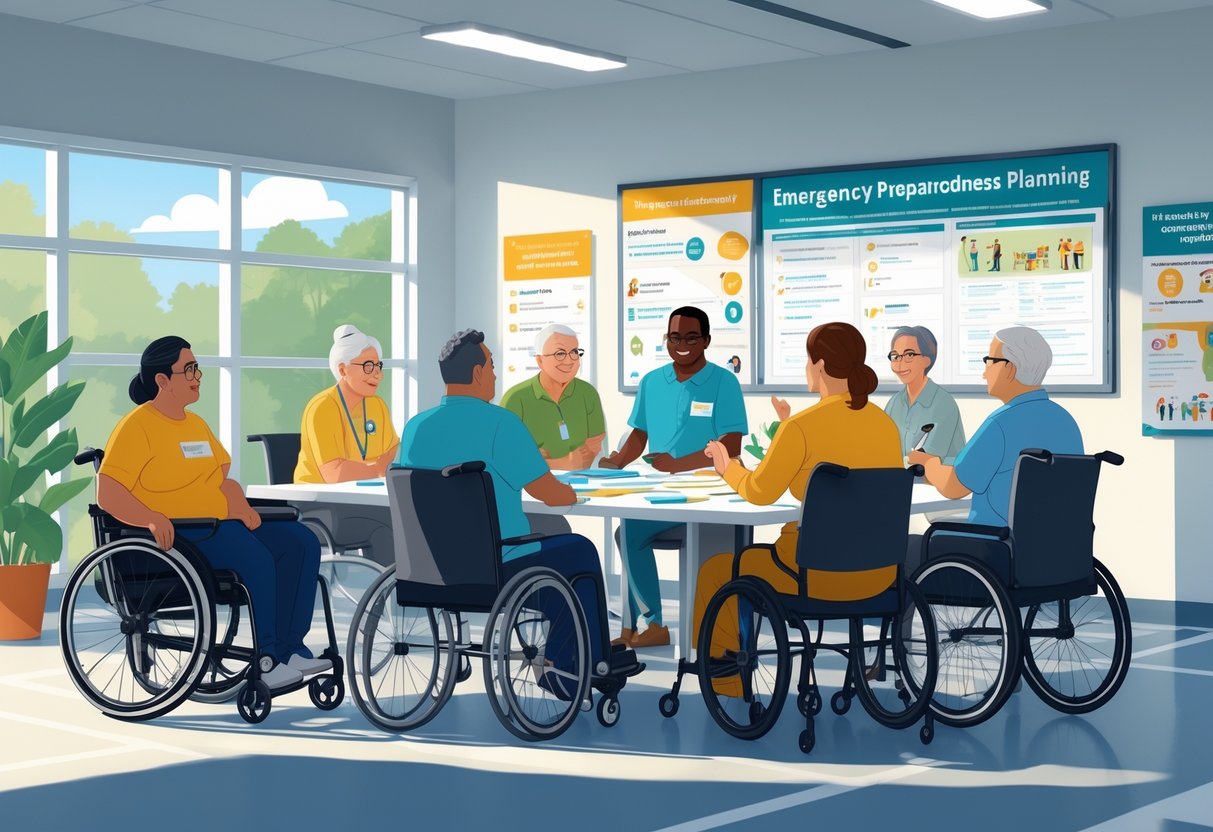
Building strong connections with local organizations and maintaining updated emergency plans creates a foundation for effective disability-inclusive preparedness. Regular training and learning from past events helps communities improve their response capabilities over time.
Engaging With Local and National Organizations
The American Red Cross offers preparedness tips for persons with disabilities[13] and provides shelter assistance during emergencies. They maintain trained staff who understand accessibility needs.
Local emergency management offices coordinate disaster response efforts. They often maintain voluntary registries for people who may need extra help during emergencies.
Key organizations to connect with:
- Disability advocacy groups
- Independent living centers
- Faith-based organizations
- Neighborhood associations
- Healthcare providers
Community-based organizations play vital roles in emergency planning. They understand local needs and can provide direct support during disasters.
Many areas have disability service coordinators who work with emergency managers. These professionals help bridge communication gaps between disabled residents and first responders.
Continuous Training and Plan Updates
Emergency plans need regular updates to stay effective. People with disabilities should review their plans[5] at least twice per year.
Training should include practice drills for different emergency scenarios. Family members and caregivers need to know their roles during actual emergencies.
Update plans when:
- Medical conditions change
- Medications are adjusted
- Living situations change
- New assistive technologies are added
- Contact information changes
Community organizations should conduct regular accessibility assessments of emergency shelters. This ensures facilities can accommodate people with various disabilities.
Emergency managers benefit from disability awareness training. This education helps them understand specific needs and challenges faced by disabled community members.
Learning From Real Events
Real emergencies reveal gaps[14] in emergency preparedness that planning exercises might miss. Communities should analyze what worked well and what needs improvement after each major event.
Post-disaster interviews with disabled residents provide valuable feedback. Their experiences help identify barriers and successful strategies for future planning.
Common lessons learned include:
- Communication systems often fail during disasters
- Transportation becomes more challenging
- Medical equipment may lose power
- Evacuation routes may become inaccessible
Emergency managers should document these findings and share them with other communities. This knowledge sharing prevents others from making similar mistakes.
Regular community meetings allow disabled residents to share concerns about emergency preparedness. These discussions help identify new challenges and potential solutions before the next disaster strikes.
Frequently Asked Questions
People with disabilities face unique challenges during emergencies that require specific planning and accommodations. These common questions address practical solutions for evacuation procedures, inclusive planning strategies, available resources, caregiver integration, communication methods, and shelter accessibility.
What specific steps should be taken to ensure the safety of people with disabilities during an emergency evacuation?
Emergency evacuation plans must include specific accommodations for mobility, hearing, visual, or cognitive disabilities[1]. People with mobility impairments need accessible evacuation routes and may require wheelchair-accessible vehicles or stretchers.
Individuals with visual impairments should have tactile maps of evacuation routes and audio emergency alerts. Those with hearing impairments need visual warning systems like flashing lights and text message alerts.
People with cognitive disabilities benefit from simple, clear instructions and familiar caregivers to guide them during evacuations. Practice drills help build familiarity with evacuation procedures.
Emergency kits should include backup batteries for medical devices, extra medications, and assistive equipment. Contact information for emergency services and support networks must be easily accessible.
How can emergency preparedness plans be made more inclusive for individuals with different types of disabilities?
Organizations need to establish processes to fulfill accommodation requests from individuals with disabilities[15] during emergency situations. Plans should address the full spectrum of disabilities including physical, sensory, cognitive, and psychiatric conditions.
Multiple communication methods ensure information reaches everyone. This includes audio announcements, visual displays, written materials in large print or Braille, and sign language interpreters.
Evacuation procedures must account for different mobility needs. Plans should identify accessible routes, backup power for elevators, and alternative methods like evacuation chairs or assistance teams.
Emergency supplies should include disability-specific items. These may include medications, medical equipment, assistive devices, and service animal supplies.
What resources are available to assist individuals with disabilities in preparing for natural disasters or emergencies?
The CDC provides emergency preparedness resources specifically for people with disabilities[5] that address planning before, during, and after emergencies. These resources help individuals develop personal emergency plans.
The American Red Cross offers inclusive preparedness resources[13] and preparedness tips specifically designed for persons with disabilities and their caregivers. They provide guidance on creating emergency kits and communication plans.
ADA.gov offers emergency planning resources[16] that help state and local governments ensure their emergency programs are accessible. These resources outline legal requirements and best practices.
Local disability service organizations often provide emergency preparedness training and resources. Many communities offer registry services, though individuals should not rely solely on these for safety.
In what ways can caregivers and support networks be integrated into the emergency preparedness plans for those with disabilities?
Caregivers should be included in all emergency planning discussions and decision-making processes. They understand the specific needs and preferences of the individuals they support.
Support networks need contact information and backup communication methods. Primary and secondary contacts should be identified in case the main caregiver is unavailable during an emergency.
Training programs should include caregivers, family members, and support staff. Everyone in the network needs to understand evacuation procedures, medication management, and equipment operation.
Emergency plans should identify which support network members have keys, medical information, and authority to make decisions. Clear roles and responsibilities prevent confusion during crisis situations.
What are the best practices for communicating emergency information to people with sensory disabilities?
Multiple communication formats ensure emergency information reaches people with different sensory abilities. Visual alerts, audio announcements, and written materials should all be used simultaneously.
For people with hearing impairments, emergency systems need flashing lights, vibrating devices, and text message alerts. Sign language interpreters should be available for emergency briefings and updates.
Individuals with visual impairments need audio descriptions of visual emergency information. Large print materials, Braille versions, and screen reader-compatible digital formats make written information accessible.
Emergency communication devices should have backup power sources. Battery-powered radios, portable phone chargers, and solar-powered devices ensure continued access to information.
How should emergency shelters be designed to accommodate the needs of persons with disabilities?
Emergency shelters must meet ADA accessibility standards including ramps, accessible bathrooms, and wide doorways. Accessible parking spaces and pathways ensure safe entry and exit.
Shelter layouts should accommodate wheelchairs, walkers, and other mobility devices. Clear pathways and adequate space around cots and common areas prevent barriers to movement.
Medical support areas need power outlets for medical devices and refrigeration for medications. Quiet spaces should be available for individuals with sensory sensitivities or anxiety disorders.
Service animals must be welcomed and accommodated with appropriate relief areas. Pet-friendly policies ensure people don’t abandon their service animals during emergencies.
Shelter staff require disability awareness training to provide appropriate assistance. Communication aids like picture boards and translation services help staff interact effectively with all residents.
References
- Mobility, hearing, visual, or cognitive disabilities can create specific needs. https://idrpp.usu.edu/projects/accessibilityhealth/files/Inclusive_Emergency_Preparedness_Guidelines_Document_Final.pdf Accessed December 1, 2025
- Preparedness for People with Disabilities. https://www.floridahealth.gov/programs-and-services/emergency-preparedness-and-response/prepare-yourself/individuals-families/disability-preparedness/index.html Accessed December 1, 2025
- individuals with disabilities face during emergencies. https://www.purdue.edu/engineering/ABE/INPREPared/wp-content/uploads/2024/12/12-3-Web-PDF-version-Inclusive-Emergency-Preparedness.pdf Accessed December 1, 2025
- Disability Inclusive Disaster Preparedness. https://preparecenter.org/topic/disability-inclusive-disaster-preparedness/ Accessed December 1, 2025
- Emergency Preparedness for People with Disabilities | Emergency Preparedness and Disability Inclusion. https://www.cdc.gov/disability-emergency-preparedness/people-with-disabilities/index.html Accessed December 1, 2025
- FEMA and other agencies now emphasize integrating people with disabilities. http://www.publichealth.lacounty.gov/eprp/documents/Strategies%20for%20Inclusive%20Planning%20in%20Emergency%20Response_FINAL.pdf Accessed December 1, 2025
- How to Develop Emergency Plans for Individuals with Disabilities. https://www.h2hhc.com/blog/how-to-develop-emergency-plans-for-individuals-with-disabilities Accessed December 1, 2025
- Making an Emergency Plan | Emergency Preparedness and Disability Inclusion. https://www.cdc.gov/disability-emergency-preparedness/people-with-disabilities/make-a-plan.html Accessed December 1, 2025
- Enhancing inclusive emergency communication: Addressing access and functional needs communities amid disasters. https://www.everbridge.com/blog/enhancing-inclusive-emergency-communication-addressing-access-and-functional-needs-communities-amid-disasters/ Accessed December 1, 2025
- Emergency Evacuation Guide for People with Disabilities PDF.. https://www.nfpa.org/downloadable-resources/guides/evacuation-guide-pdf Accessed December 1, 2025
- Sheltering and Evacuating | Emergency Preparedness and Disability Inclusion. https://www.cdc.gov/disability-emergency-preparedness/people-with-disabilities/sheltering-and-evacuating.html Accessed December 1, 2025
- Building an Emergency Kit | Emergency Preparedness and Disability Inclusion. https://www.cdc.gov/disability-emergency-preparedness/people-with-disabilities/build-a-kit.html Accessed December 1, 2025
- Inclusive Preparedness Resources. https://www.redcross.org/get-help/how-to-prepare-for-emergencies/inclusive-preparedness-resources.html Accessed December 1, 2025
- Real emergencies reveal gaps. https://thecil.org/wp-content/uploads/2024/12/Report-V1_final-accessible.pdf Accessed December 1, 2025
- Effective Emergency Preparedness Planning: Addressing the Needs of Employees with Disabilities. https://www.dol.gov/agencies/odep/publications/fact-sheets/effective-emergency-preparedness-planning-addressing-the-needs-of-employees-with-disabilities Accessed December 1, 2025
- Emergency Planning. https://www.ada.gov/topics/emergency-planning/ Accessed December 1, 2025